Monday, February 11, 2013

Jacobsen-French Chef-Armory Show (11-17 February)

on this date in Design…

Arne Jacobsen, Danish architect & designer, birthday 11 February 1902
The French Chef, American cooking show, premiere 11 February 1963
The Armory Show, 1st avant-garde art show in the US, opening 17 February 1863

Luckily for us, Arne Jacobsen listened to his father and opted for a more stable career of architecture than painting.  The wonderful aspect about Arne’s design was he was able to take Functionalism and translate it into products & spaces that were anything but sterile and unwelcoming putting him at the forefront of the Scandinavian design movement.  Inspired by Charles & Ray Eames, he worked with carpenter Fritz Hansen to develop the Ant Chair: a simple bent plywood piece with three legs.  This made it light weight, compact and stackable, very similar to the concept of Alvar Aalto’s three-legged Stool 60. 
Arne was commissioned for what could be considered the world’s first “designer” hotel, the SAS Royal Hotel in Copenhagen, designing everything from the furniture to the ashtrays.  It was for this project that the Swan and Egg Chairs were developed.  The gentle curves of the Swan Chair welcome the curves of the body and the envelope of the Egg Chair creates a cozier wingchair for the new age.  Both of these designs in addition to numerous others are perfectly adapt to contemporary spaces.
 
It may seem out of place to have the premier of a televised cooking show on the list.  However, Julia Child had a broad impact not just on the psyche of the American housewife.  This and subsequent cooking shows have had an enormous impact on the design of the American home.  With Julia’s easy-going and effervescent attitude she made expert gastronomy look easy by showing us at home it was OK to make a few mistakes in the pursuit of perfection. 
With “The French Chef”, PBS allowed Julia to take intimidating recipes such as the meticulous 20 page recipe for French bread and demonstrated how accessible delicious food could be.  This lead to more and more equipment and gadgets to be collected by the at-home-cook until the kitchen became the enormous gourmet extravagance and center of the home it is today.  No longer was the suburban kitchen a lonely closed off room tucked away from formal spaces. 
Now guest are encouraged to share the kitchen, indulge in a world of flavors as their waistlines expanded as well.  Home design has come full circle to meet the needs of the modern family lifestyle.  Formal spaces have been abandoned in favor of open floor plans which, good and bad, invite guests into the bosom of the home.
 
100 years ago, America was introduced to modern art at the Armory Show of 1913 in New York City.  It may seem counter intuitive to call something “modern” that is over a century old but it was the new way of thinking that truly defines where we as a society are headed.  In terms of social consciousness, identity, global connectivity, we are still on the cusp of understanding of how we, as humans, fit into a drastically different world than centuries past and thusly how we communicate and express ourselves.
 
The debate “What is art?” still rages today as Marcel Duchamp begged the question with his signed urinals hanging on the wall.  Abstraction and Expressionism attempted to communicate the artist’s thoughts in non-traditional medium.  No longer was Realism in the traditional sense necessary, there was the photograph for that.  However, how the photograph and realistic painted imagery were used to communicate social and political ideas and thrust forward to the viewer that same nagging question.  Americans were for the first time exposed to European masters such as Manet, Munch, Rodin, Picasso and many, many more.  At the same time, they discovered their own home-grown modern artists such as Stella and Whistler that would pick up the baton and make New York City a new hub of the artist community. 
 

Monday, February 4, 2013

Arts & Letters-Owings-Fire Extinguisher (4-10 February)

on this date in Design…

National Institute of Arts & Letters, honor society, Act of Congress passed 4 February 1913
Nathaniel Owings, American architect, birthday 5 February 1903
Fire Extinguisher, invented by Alanson Crane, patented 9 February 1863

The National Institute of Arts & Letters has a confusing and unnecessarily complicated history of inception.  Without going into much detail as to how, the organization is now known as the American Academy of Arts & Letters.  The original “Institute” was founded in 1902 but was recognized by an act of Congress in 1913.  This does not mean it is a government funded or controlled organization, simply that it is recognized and is essentially an honorary title.  Other organizations with this honor include the Girl/Boy Scouts and the Veterans of Foreign Wars.  Essentially, the purpose of the AAA&L is “to foster and sustain excellence in Literature, Music and the Fine Arts by identifying and encouraging individual artists.”  It does this by awarding prizes (money), exhibiting work and funding performances & literature of up-and-coming artist & authors.  To be elected to the 250 council is not only an honor by being recognized by your peers but is also a life-long membership.  The Academy has also identified and fostered some of the country’s most influential and important artists.  Despite a black period when modernism was shunned, today the AAA&L is more akin to the original progressive intention.  Members include Michael Graves, Charles Gwathmey, Maya Lin, Richard Meier, I. M. Pei and Robert Venturi to name just a few.    


As one of the founding members of the Chicago-based architectural firm Skidmore Owings & Merril (SOM), Nathaniel Owings’ business & organizational acumen lead the firm to become known worldwide for reliability for large-scale developments.  Despite a cantankerous relationship with Louis Skimore, SOM became and still is the quintessential “go-to” firm for record making skyscrapers.  The two were so independently strong willed that a satellite office had to be opened in New York so they didn’t have to be in the same city together.  But, with the even-tempered engineer John O. Merril in the middle, the business partnership was an enormous success.  SOM has the most buildings on the “World’s Tallest Buildings” list with 10. 
That’s 6 more than any other firm on the list and they are about to add 11th with One World Trade Center holding fast to spots 1 and 2.  Owings retired from the firm in 1975 but remained an active advocate for open public spaces in American cities including acting as President Johnson’s design advisor for the National Mall in Washington, D.C.  Additionally, the California Architectural Council of the AIA continues his legacy by awarding an architectural prize in his honor each year to projects that reconcile the potential adverse needs between nature and the built environment.  The 2012 winner, the California Academy of Sciences is truly inspiring as it serves two purposes as a building and a science experiment simultaneously.  Think of it as one giant terrarium.     

In the wake of yet another deadly night club fire last week (this time in Brazil) it is appropriate that we look at a fire prevention device.  Before there were fire extinguishers, there were fire grenades.  It seems counter-intuitive to throw a grenade at a fire.  However, these small orb-shaped glass bottles filled with fire suppression liquid would be hurled at an ensuing fire with moderate success.  With the advent of the fire extinguisher, a person would have a bit more control over where the liquid landed and thereby a better chance of actually containing the fire.  The basic principle is to contain the liquid within a pressurized canister when opened the liquid will shoot out; much like a “Super-Soaker” water gun works.  Thankfully, there have been many devices created over the past few centuries but Alanson Crane’s was the first in the US. 
With each new technology, buildings and the public at large are safer provided municipal codes are in place, followed and enforced.  The US today has some of the strictest Life Safety codes in existence.  These are not hurdles that hinder the design process.  These are essential the functionality of a building and legitimize our job as design professionals.  The next time you enter a public building, take a moment to locate some of the devices put there by the designer for your safety: lighted exit signs, overhead sprinklers, fire alarms, emergency back-up lighting (thank you Super Dome) and attached to the wall--a fire extinguisher.     

Links: 

American Academy of Arts & Letters 

Biography of Nathaniel A. Owings on the SOM website 
Willis Tower, Chicago, IL
John Hancock Center, Chicago, IL
Nathaniel A. Owings Award
California Academy of Sciences, San Francisco, CA

National Fire Protection Association
NFPA artidle on Brazilian nightclub fire, 27 January 2013
NFPA article on fire extinguishers
ESPN article on the Super Dome Super Bowl power outage, 3 February 2013


Monday, January 28, 2013

Pollock-Lego-Computer Virus (28 January - 3 February)

on this date in Design…

Jackson Pollock, American abstract expressionist painter, birthday 28 January 1912
Lego, Danish construction toy, patented 28 January 1958
Computer Virus, first written by Richard Skrenta, 30 January 1982

It can be argued that Jackson Pollock’s rhythmic, almost ritualistic drip painting style can be linked to Native American sand painting from the Southwest.  As a child, he accompanied his father on government surveying expeditions where he would have been first introduced to the art.  Later, after moving to New York with his brother, Pollock became involved in the expressionist movement and eventually it’s most famous and successful. 
After completing a commission for Peggy Guggenheim in 1943, Pollock’s groundbreaking style was introduced to the art community and then developed further at the East Hampton home he shared with wife Lee Krasner.  Krasner was an enormously talented expressionist herself but was overshadowed by her husband’s work.  With the canvas lying on the floor, Pollock would use stiffened brushes, sticks and even basting syringes to pile paint.  It was an immediate means of creating art and added a new dimension to the experience as it could be viewed from all directions.  This would come in handy years later as the thickly coated canvases will shift much as antique window glass.  This requires the pieces to be routinely rotated.  As groundbreaking as Pollock’s new style was, he abruptly halted all drip painting after the 1949 Life magazine article was printed in pursuit of new expressions but sadly never found equal success.   

"Leg godt” means to “play well” in Danish and to carpenter Ole Kirk Christiansen it meant to make the highest quality toys so children can fully express their imaginations.  To this day, Lego brand toys and their trademark LEGO brick continue to inspire future architects and engineers (or really any kids who like to play). 
In 1958, thanks to injection molded plastic, Christiansen’s son lead the company to patent the original brick based on an improvement to an existing British patent.  Lego’s brick easily snapped together securely while still separating without much effort.  Today, these original bricks are still compatible with those manufactured today leading the way for generations of fans to pass down their highly prized collections.  That is, those that haven’t fallen victim to vacuum cleaners, mouths of curious pets or the notorious Lego gnomes who steel the single most essential piece from your construction set in the middle of the night. 

In high school, Richard Skrenta was a notorious prankster.  So much so that his friends began to refuse to barrow computer games and disks because he would alter them to display onscreen joking messages.  But in 1982, while on winter break in the ninth grade, Skrenta harmlessly created the first large-scale, self-spreading personal computer virus called “Elk Cloner”…and it was for the Apple II.  That’s right; the first computer virus was designed for Macs, not Microsoft platforms.  The truly harmless program would copy itself onto a computer’s hard drive and subsequently copy itself onto any disk inserted.  This simple code is nothing like the multi-dimensional complicated programs that plague computers worldwide today. 
However, Skrenta’s joke ushered in an awareness of the potential for terrorist and thieves to inflict damage thereby creating the entire industry of malware protection.  Later, Skrenta ventured into less malicious ventures including helping to launch Netscape, creating the online news source Topix and more recently, the search engine Blekko which is set out to rival Google without all the spam.    

Links:  

Pollock-Krasner House & Study Center, East Hampton, New York 
Jackson Pollock website
Pollock work at MoMA, New York City, USA
Krasner work at MoMA, New York City, USA
Pollock work at the Tate, London, UK 
Krasner work at the Tate, London, UK
Pollock movie trailer

Lego website
Legoland parks website
Felix Baumgartner's skydive from space in Legos

The Elk Cloner Poem
The Skrentablog
Blekko search engine

Monday, January 21, 2013

Manet-Tschumi-Lightbulb (21-27 January)

on this date in Design…

Edouard Manet, French impressionist painter, birthday 23 January 1832
Bernard Tschumi, Swiss-born French deconstructivist architect, birthday 26 January 1965
Lightbulb, patent granted to Thomas Edison, 27 January 1880

 
Of all the brilliance that emerged from France in the latter part of the 19th century during the impressionism movement, perhaps the most influential to modern art would be Edouard Manet.  The manipulation and engagement of the viewer with his paintings was revolutionary.  This action figuratively “broke through the fourth wall” and forced the viewer to participate with the scene in front of him/her.  One of Manet’s first pieces to challenge the modern convention was Le Déjeuner sur l'Herbe.  Here he took classic poses in a pastoral setting from the works of masters of Raphael and Titian and inserted the common university student and shockingly nude and nearly nude prostitutes.  Today, similarly the work of Kehinde Wiley is heavily influenced by this juxtaposition by placing contemporary figures in classic heroic poses.  
Manet’s next step to shock and engage was with his version of Olympia who defiantly stares strait back out of the canvas.  His Olympia is not a goddess but another prostitute welcoming her next client, presumably the viewer.  Needless to say, this painting made Parisian society even more uncomfortable.   
Manet expanded on this with Un Bar aux Folies Bergère where in the reflection behind the barmaid you see the customer not visible in the front.  This leads one to assume it is a reflection of the viewer and the forlorn look in her eyes a testament to her dissatisfaction with her occupation as she hides her cleavage by a corsage; out of the ordinary for the bar maids at the Folies.  This mix of playing with the viewer and social commentary are familiar themes today but in Manet’s time, never before had such challenges been posed. 


When Bernard Tschumi won the commission for the design of Parc de la Villette in Paris, France yet again sat on the forefront of a revolutionary movement in design.  This time, it was deconstructivism and the Swiss-born Tschumi was the movement’s most preeminent practitioners.  The site was over 150 acres of slaughterhouses established by Napoléon III and thereby had an unpleasant history.  The desire to remove that image was a perfect setting for the deconstructivist theories whereby the shape of a building is not permanently fixed to the current activity currently housed within.  Rather, the activity within constantly forces the reevaluation of the shape of the building.  Therefore, it is a living structure and the history of neither the building nor the historical context has no bearing on it.  A testament to the success of the theory is that several of the follies have been renovated and repurposed to restaurants and visitor centers, et cetera.  These programmatic pieces were not in the original plan but as the needs of the park evolve there is no need to build new structures or compromise Tschumi’s original concept for the follies to be reference points on a grid.   With the success of the la Villette he gained a foothold in the global architectural landscape which has led to such commissions as the architecture school at F.I.U and the controversial Acropolis Museum in Athens, Greece.  Critics argue that this complete disregard for the historic context for which Greece is renowned, this new museum is harming the building itself and the surrounding contextual context of the city.  It is hard to disagree with the critics but it is sure that in a few years’ time it will revered for its forward thinking as the Pompidou Center. 


As with most of Edison’s inventions, he did not originate the idea, merely improve upon an existing idea and beat his competitors to the patent office.  In the case of the lightbulb, Edison purchased the rights to an earlier version and then began experimenting with materials and amperage.  In October of 1879 he was able to improve the vacuum tube, carbon filament and lower electrical current to develop a bulb which lasted for an astonishing (for that time) 13 ½ hours.  After applying for the patent, he demonstrated his achievement at his Menlo Park laboratory by lighting it up on New Year’s Eve. 
Two years later, Edison created a market for his lightbulb when he switched on the power at the Pearl Street Power Station in lower Manhattan.  This was the first investor funded commercially successful electrical grid.  These achievements made his work more economically practical to bring to the mass market thereby increasing his notoriety.  And it is for his business acumen in addition to his innovations that Thomas Edison name is more prolific than Tesla, Westinghouse and others of equal creative caliber.    


Links:  


Monday, December 17, 2012

Chauvet-De Wolfe-Olbrich (17-23 December)

on this date in Design…

Chauvet-Pont-d’Arc Cave, Ardèche, France, discovered 18 December 1994
Elsie De Wolfe, American actress & interior decorator, birthday 20 December 1865
Joseph Olbrich, Austrian architect and co-founder of the Vienna Secession, birthday 22 December 1867

With as small as the world seems today, it may be unbelievable that in the modern era there are still prehistoric discoveries which amaze and challenge the collective knowledge.  As recently as 1994, the immense cave of Chauvet with its perfectly preserved paintings dating over 30,000 years was discovered, isolated by an ancient landslide. 
What makes these images different than those found at Lascaux?  Not only are these images over twice as old, but they show similar and in some cases more advanced techniques.  The artist(s) prepared the surfaces by scraping away debris and sometimes older paintings.  There are images that have been carved into the surface not just applied with paint.  There are full “scenes” of action, not just encyclopedic representations of animals.  In one scene there is a dominance struggle between two rhinoceroses.  Of course there are rudimentary acknowledgments of perspective and action as with Lascaux    
However, the level of shading detail here evoke a sense of three-dimensionality.  With every new discovery the understanding of the prehistoric human mind becomes richer.  The more complex these findings are offers the opportunity to re-examine what it truly means to be human and the need to express one’s self artistically. 
 
Most people will tell you that Elsie De Wolfe is “The First Lady of Interior Decoration”.  However, that moniker barely begins to describe what a force she was.  De Wolfe almost single-handedly created the separate and distinct profession of the interior decorator.  After a career on the stage, at the age of 40, she was commissioned to complete the interiors of the Colony Club, one of the first women’s clubs in New York.  De Wolfe figuratively “threw open” the dark velvet drapery of the Victorian era and using inspiration from 18th century France created light, bright and airy feminine spaces.  It could be said that her design sensibilities manifested themselves as a child when she threw a kicking and screaming temper tantrum in response to her parents redecorating the drawing room. 
 
Even in her acting career she was more known for her creative costuming (which she designed) than her thespian abilities.  De Wolfe’s design successes should be credited to her knack for self-promotion and connections as a socialite in both the American and European circles.  Her business was bolstered by such clientele as Morgan, Astor & Whitney in addition to inviting Vogue to cover her parties.  The descriptions of her hostess abilities in the magazine brought her name and style to housewives around the country and perhaps even influenced the likes of Martha Stewart.  De Wolfe’s book “The House in Good Taste” became equally an influential beginning the trend of faux finishes and animal print upholstery; only in Elsie’s case, the animal print was more likely to be real.   


Joseph Olbrich along with Gustav Klimt, Josef Hoffmann & Koloman Moser established the Vienna Secession movement in 1897 but Olbrich gave the group what would become its figurehead: the Secession Hall.  The movement sought to break from the prevailing traditional conservatism of the Vienna Künstlerhaus which focused on historicism.  Instead, Olbrich wanted to bring “purer” geometric forms to buildings.  This can be seen in the Secession Hall with the iconic orb atop the structure contained by four rectangular pillars.  The building surface is then decorated with linear ornament which would come to be called “whiplash” or “eel” style. 
These ideas would give way to the Art Nouveau movement which eventually formed a theoretical break in the Secession members.  However, Olbrich maintained the original ideal of the group and found extended success in the States.  After participating in the Louisiana Exhibition in St. Louis, he was appointed corresponding member of the AIA, most likely at the behest of Frank Lloyd Wright.  It is a small wonder as the two shared similar theories on architecture and ornamentation.
Links:

The Chauvet Cave, Ardèche, France
"Cave of Forgotten Dreams", flim by Werner Herzog
The Bradshaw Foundation for ancient rock art

article on Elsie De Wolfe, Architectural Digest
"The House in Good Taste", by Elsie De Wolfe, University of Wisconsin Digital Collections

The Secession Hall, Vienna, Austria
archINFORM for the Secession Hall
archINFORM for Hochzeitsturm, Darmstadt, Germany


Monday, December 3, 2012

Folding Chair-Royal Opera House-Freud (3-9 December)

on this date in Design…

Folding Theater Chair, American inventor Aaron Allen, patented 5 December 1854
Royal Opera House, London, United Kingdom, opens 7 December 1732
Lucian Freud, German-born British painter, birthday 8 December 1922


A folding chair seems like such a simple concept and in fact it is.  After all there have been multiple versions of portable chairs dating back from nomadic tribes.  However, it appears as though it took millennia to reach the theater.  In Shakespearean times, those in the audience stood for the duration of the performance.  It is no wonder they might turn into harsh critics if the play not worth their tired feet.  Only those privileged enough to afford a balcony might find a space on a wooden bench.  Finally, in the mid-19th century Aaron Allen found a solution where a theater owner might appease the masses and retain maximum profits. 
With the folding theater seat, precious space was used efficiently as the aisle between rows could be narrowed.  The seats were still wooden but at least they were seats.  Today, theater owners continue to cater to their patrons as their seats have become larger, sumptuously upholstered and come with a cup holder (just like your car).  They know that if they keep the rabble happy they will be less likely to throw their popcorn at the screen.  But in reality, as “home theaters” become more and more sumptuous as well, the likelihood one might venture out to a theater has declined.  It is unlikely theater will die out completely which makes the overall viewer experience all the more important. 


By the time the first Royal Opera House at Covent Garden was built, Allen’s invention was more than a century away.  As can be seen in the image here, those on the floor are standing.  There have been a total of three theaters built on this site, the first being destroyed by fire in 1808.  That building designed by Edward Shepherd added to the religious complex begun by who can be described as the first significant British architect of the modern era: Inigo Jones. 
Interestingly, Jones started out as a theatrical designer before he reached notoriety as an architect.  The Royal Opera not only housed the company managed by John Rich, it also was the venue by which George Frideric Handel became one of the most significant composers of the era as musical director.  A large portion of his work was composed specifically for the venue. Unfortunately, Handel’s “Messiah” which debuted in Dublin in 1742 to great applause and adulation was harshly criticized when it was presented at the Royal Opera a year later.
The critics thought it too exalted a piece to be performed in a theater by singers in secular garb rather than in a cathedral.  It has of course become his most celebrated and most performed work of all time.  It is assured it will be heard at least once this Christmas season at some point. 


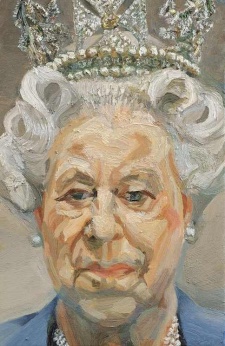
If Sigmund Freud made you uncomfortable with the subconscious thoughts you might be harboring about your mother, then his grandson Lucian makes you even more so as you are compelled to stare into the exposed souls of his subjects.  Among those who have willingly and wholeheartedly bore their souls to him include a pregnant Kate Moss and the Queen of England. 
The nudes who sat for Lucian Freud are not only free of clothes but seem to let lose all their emotions and thoughts to the canvas.  Flesh tones highlight what appear to be the most unattractive portions of the figure which in turn make them compelling, captivating and beautiful.  A few years ago, a U.S. television show did a piece on an exposition of his only to receive a mountain of angry letters from viewers. 
The most upsetting thing to them was producers had chosen to film the work with strategically placed visitors in front what might be argued as offensive anatomy to act as natural censor bars.  It appears that even over the television screen, Lucian Freud’s work begs to be seen completely exposed. 

 
Links:

Globe Theater, London, U.K. 
iPic Movie Theaters 
IMAX Movie Theaters 

Royal Opera House, Covent Garden, London, U.K.
Annotated full façade of the Royal Opera House
Royal Opera House Collections online
Biography of Inigo Jones from the Royal Insitute of British Architects
Handel House, London, U.K.
Handel's Messiah Hallelujah Chorus

Article on Lucian Freud, CBS Sunday Morning
Slideshow of Lucian Freud work, CBS Sunday Morning
Lucian Freud work on artnet
Lucian Freud work at MoMA, NYC
Interview with Lucian Freud, 1988 
Obituary for Lucian Freud, the Daily Mail